
Public-Sector Redevelopment Initiative
Translating Vision into a Defensible, Institution-Ready Feasibility Submission: He Puna Taimoana
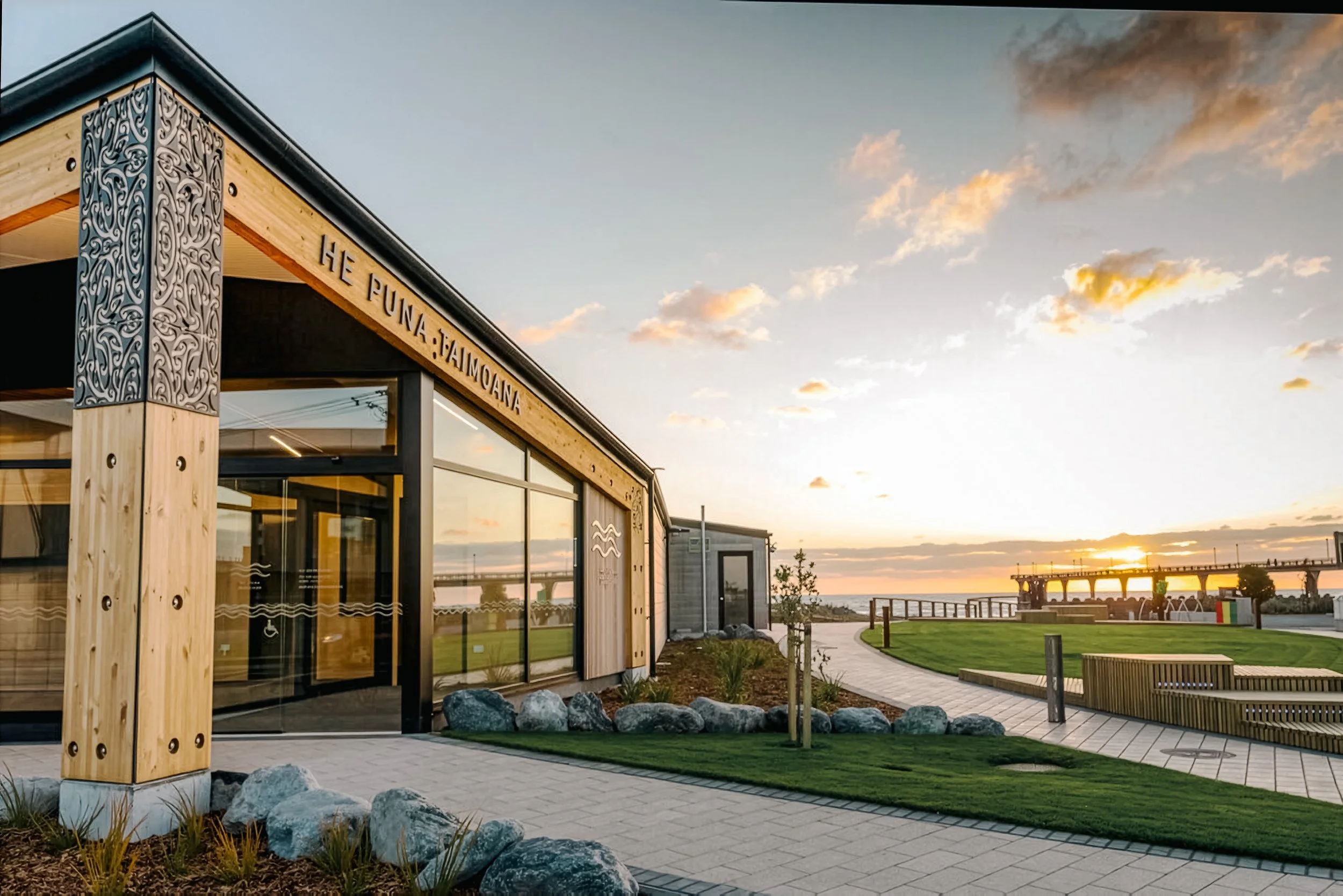
Image: BOS Studio Architecture
Executive Summary
Project: He Puna Taimoana, Christchurch, New Zealand
Sector: Civic Development & Municipal Revitalization
Engagement Type: Strategic Feasibility & Institutional Alignment
Role: Feasibility Lead & Governance Strategist
He Puna Taimoana formed part of the broader regeneration vision for New Brighton, Christchurch. Advancing the initiative required a defensible, evidence-backed feasibility submission aligned with Christchurch City Council’s institutional review and decision-making framework.
The engagement structured multidisciplinary inputs — including market analysis, consultant contributions, design considerations, governance pathways, and delivery risk framing — into a cohesive feasibility submission designed to meet Council’s scrutiny standards.
The result was a disciplined, institutionally aligned submission that supported the proponent’s advancement within Council’s review process.
Strategic Impact

Image: BOS Studio Architecture
He Puna Taimoana emerged as a proposed redevelopment initiative within the broader revitalization of New Brighton, Christchurch in New Zealand.
Advancing the concept required translating vision into a defensible, evidence-backed feasibility submission capable of meeting Christchurch City Council’s institutional decision-making framework.
Key outcomes included:
Led the development of a comprehensive feasibility study submitted to Christchurch City Council
Integrated market analysis, consultant inputs, and architectural strategy into a unified strategic framework
Aligned project vision with municipal priorities and community objectives
Structured governance positioning and institutional alignment pathways
Contributed to delivery risk framing grounded in design realities
Produced executive-level documentation capable of withstanding institutional scrutiny
The rigour and institutional alignment of the submission supported the proponent’s advancement through Council’s review process
This engagement demonstrates how disciplined structuring and governance positioning can meaningfully influence public-sector decision-making.

The Context
He Puna Taimoana was conceived as part of broader revitalization efforts in New Brighton following the Christchurch earthquakes.
For the proposal to advance, Christchurch City Council required a defensible, evidence-based feasibility submission addressing:
Financial viability (supported by consultant analysis)
Community value and public benefit
Governance structure and oversight pathways
Delivery risk and implementation sequencing
Long-term operational sustainability
This was not a conceptual pitch. It required structured analysis aligned with Council’s institutional decision-making framework.
The mandate was to translate vision and multidisciplinary inputs into disciplined, evidence-backed strategy capable of withstanding public-sector scrutiny.
Scope of Engagement
The engagement combined strategic analysis, governance structuring, and institutional alignment.
Strategic Feasibility Development
Objective
Translate a development concept and multidisciplinary inputs into a disciplined, defensible feasibility submission aligned with Christchurch City Council’s institutional review standards.
Focus
Market demand synthesis and positioning clarity
Integration of consultant and architectural inputs into a cohesive strategic framework
Governance pathway articulation aligned with public-sector oversight expectations
Structured consideration of delivery constraints and design-related risk factors
Alignment with municipal policy, revitalization strategy, and community objectives
Executive-level document architecture, authorship, and reporting design
Integrated Design & Delivery Alignment
In parallel with feasibility development, I worked closely with architectural leadership to ensure that design intent, material strategy, and delivery considerations were accurately reflected in the feasibility submission.
This collaboration ensured that the submission was grounded in real design and procurement realities — strengthening its credibility with Council and reinforcing practical delivery logic.
Result
The project was elevated from a development concept to a structured, evidence-backed feasibility submission aligned with institutional review standards.
Council received:
Clearly articulated governance pathways
Integrated strategic and design rationale
Structured consideration of delivery realities
Decision-ready documentation capable of withstanding scrutiny
The rigour and clarity of the submission contributed to Council selecting the proponent to advance the project.
What This Engagement Demonstrates
Complex public-sector development initiatives require more than design ambition. They require disciplined structuring that aligns vision with institutional decision-making frameworks.
This engagement reflects strength in:
Strategic feasibility architecture and executive-level authorship
Integration of multidisciplinary inputs into cohesive institutional submissions
Governance framing aligned with public-sector oversight expectations
Translation of design intent into decision-ready strategic narrative
Municipal alignment and institutional navigation
Cross-functional integration between strategy and architectural leadership
By translating complexity into structured clarity, the work positioned the project to move forward with credibility and confidence.